
Workplace Noise Isn’t Just an Ear Problem: It’s a Heart Problem Too
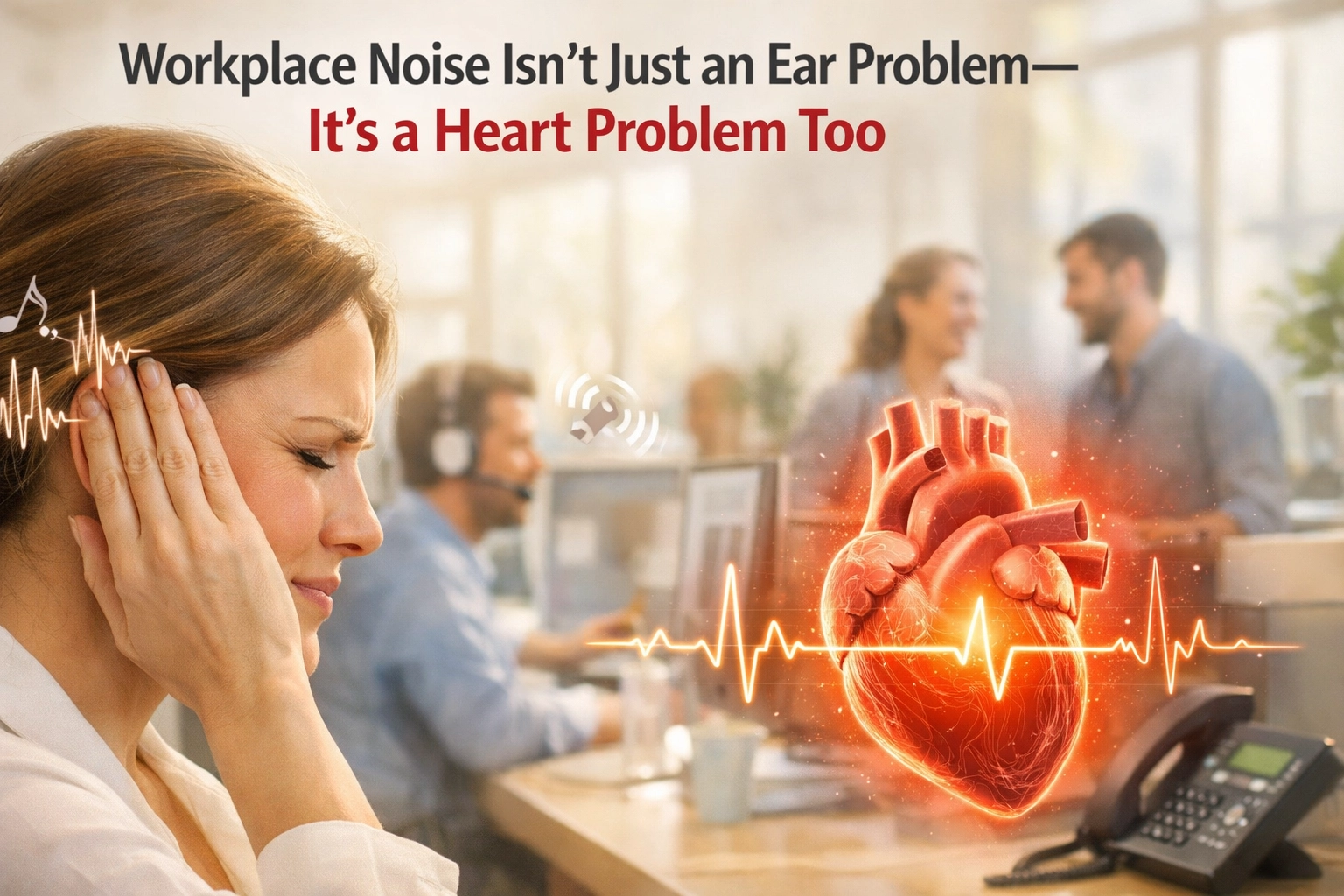
February marks American Heart Month, a time when health professionals spotlight cardiovascular disease prevention. While most conversations focus on diet, exercise, and cholesterol, a critical yet often overlooked risk factor deserves attention: workplace noise exposure. The reality is straightforward: chronic occupational noise doesn't just damage hearing. It significantly increases the risk of heart disease, hypertension, and other cardiovascular conditions.
The Hidden Connection Between Noise and Heart Health
When most people think about workplace noise hazards, they imagine hearing loss or tinnitus. These concerns are valid, but the damage extends far beyond the auditory system. Occupational noise exposure functions as a documented cardiovascular risk factor, triggering a cascade of physiological responses that directly impact heart health.
The connection isn't subtle. Research demonstrates that workers exposed to chronic occupational noise experience measurably higher rates of cardiovascular problems compared to their counterparts in quieter environments. This relationship holds true across various industries, from manufacturing plants and construction sites to airports and lumber mills.

Understanding the Cardiovascular Impact
The cardiovascular effects of workplace noise manifest in several measurable ways. Ischemic heart disease, hypertension, and acute myocardial infarction all show increased prevalence among workers in high-noise environments.
Heart Disease Risk
Cross-sectional studies involving over 6,300 participants reveal concerning patterns. Workers chronically exposed to occupational noise demonstrate a two to three-fold increased prevalence of angina pectoris and coronary heart disease compared with non-exposed individuals. The associations prove particularly strong among younger workers, men, and current smokers.
Long-term cohort studies paint an equally troubling picture. Research following 27,464 blue-collar workers from lumber mills demonstrated that chronic noise exposure correlates with increased risk of death from acute myocardial infarction. The relative risks ranged from 1.5 to 4.0 depending on cumulative exposure levels: a significant escalation that cannot be dismissed.
Blood Pressure Elevation
Blood pressure changes represent one of the most consistent findings in occupational noise research. Long-term exposure to workplace noise significantly raises both systolic and diastolic blood pressure. Studies document that noise exposure associates with a 2.03-fold increase in hypertension prevalence.
The relationship proves dose-dependent. Even modest increases matter: each one-decibel increase in noise exposure associates with a 0.17 beats per minute increase in heart rate. Over time, these incremental changes accumulate into clinically significant cardiovascular strain.

The Numbers Tell a Serious Story
The scope of occupational noise exposure creates a substantial public health burden. Among current workers, approximately 25% face occupational noise exposure. More alarmingly, roughly 58% of hypertension cases among exposed workers can be attributed directly to workplace noise.
The burden extends to other cardiovascular risk factors. Fourteen percent of elevated cholesterol cases link to noise exposure, as do 9% of hearing difficulty cases. These percentages translate to millions of affected workers when applied to the national workforce.
The economic implications prove equally significant. Cardiovascular disease represents one of the costliest health conditions, generating billions in medical expenses and lost productivity annually. When workplace noise contributes substantially to this disease burden, employers face not only moral obligations but financial incentives to address the problem.
How Noise Damages Your Heart
Understanding the biological mechanisms helps explain why workplace noise poses such serious cardiovascular risks. Noise doesn't simply annoy: it triggers multiple physiological pathways that directly harm cardiovascular health.
The Stress Response
Noise exposure activates the body's stress response system. This activation increases cortisol production, the primary stress hormone. Elevated cortisol levels don't remain isolated: they trigger a cascade of cardiovascular changes including increased blood pressure, elevated heart rate, and enhanced blood clotting factors.

Inflammatory Processes
Chronic noise exposure promotes inflammatory processes throughout the body. The stress generated by persistent workplace noise elevates interleukin-6 and other inflammatory agents through oxidative stress pathways. These inflammatory markers directly contribute to atherosclerosis development and cardiovascular disease progression.
Blood chemistry changes accompany the inflammatory response. Noise-related stress increases blood cholesterol and triglyceride levels, both established risk factors for heart disease. The body essentially responds to chronic noise exposure as a persistent threat, maintaining elevated cardiovascular readiness that eventually damages the system.
Autonomic Nervous System Dysregulation
Noise exposure disrupts the delicate balance between the sympathetic and parasympathetic nervous systems. This dysregulation manifests in multiple ways: decreased arterial compliance, altered heart rate variability, and impaired cardiovascular recovery after stress.
Heart rate variability, a measure of the variation in time between heartbeats, serves as an important indicator of cardiovascular health. Reduced heart rate variability predicts increased cardiovascular mortality. Chronic workplace noise exposure consistently demonstrates negative effects on this crucial parameter.
Who's Most at Risk?
While all workers in high-noise environments face elevated cardiovascular risks, certain populations demonstrate heightened vulnerability. Understanding these risk patterns helps target prevention efforts effectively.
Gender Differences
Research suggests that women may experience considerably stronger adverse effects from occupational noise exposure. However, studies specifically examining female workers remain limited, creating a significant knowledge gap. The available evidence indicates that sex-specific biological responses to noise stress may amplify cardiovascular damage in women.
Age and Duration
Younger workers show surprisingly strong associations between noise exposure and cardiovascular disease. This finding challenges assumptions that cardiovascular effects require decades of exposure to manifest. The data suggest that cardiovascular damage from workplace noise begins earlier than previously recognized.
Duration of exposure matters significantly. Workers with longer tenure in high-noise environments demonstrate progressively elevated cardiovascular risk. This cumulative effect underscores the importance of early intervention and consistent hearing protection throughout one's career.

Combined Risk Factors
Noise exposure doesn't operate in isolation. Workers who smoke demonstrate particularly pronounced cardiovascular effects from workplace noise. The combination of smoking and noise exposure creates synergistic cardiovascular damage exceeding the sum of individual risks.
Similarly, workers with pre-existing cardiovascular risk factors face amplified danger in high-noise environments. Individuals with family histories of heart disease, diabetes, or obesity require special attention in occupational noise assessment and protection.
What This Means for Workers and Employers
The cardiovascular implications of workplace noise demand comprehensive response strategies that extend beyond traditional hearing conservation programs. Occupational health initiatives must recognize noise as a cardiovascular hazard requiring medical surveillance and control measures comparable to other serious workplace health threats.
Medical Surveillance
Workers in high-noise environments benefit from regular cardiovascular screening alongside audiometric testing. Blood pressure monitoring, lipid panels, and cardiovascular risk assessments should become standard components of occupational health programs in noise-exposed populations.
Engineering Controls
The most effective approach remains reducing noise exposure at the source. Engineering controls: equipment modifications, sound barriers, acoustic treatment, and equipment substitution: provide superior protection compared to personal protective equipment alone. Employers should prioritize these solutions in noise control hierarchies.
Protecting Both Your Ears and Your Heart
This dual threat of auditory and cardiovascular damage emphasizes the critical importance of comprehensive hearing conservation programs. Workers should utilize appropriate hearing protection consistently, participate in regular health screenings, and report concerning symptoms promptly.

Healthcare providers should consider occupational noise exposure when evaluating cardiovascular risk in working-age patients. A thorough occupational history helps identify this often-overlooked risk factor, enabling more accurate risk stratification and targeted prevention strategies.
For organizations seeking to protect worker health comprehensively, professional audiological services provide essential support. Comprehensive hearing conservation programs address both immediate hearing protection needs and long-term cardiovascular health considerations through education, monitoring, and intervention.
This American Heart Month, the message extends beyond traditional cardiovascular risk factors. Workplace noise represents a serious, modifiable cardiovascular hazard affecting millions of workers. Recognition and action can protect both hearing and heart health, reducing disease burden and improving quality of life for exposed workers.
Tags: workplace noise, cardiovascular health, occupational health, heart disease, hypertension, hearing protection, noise exposure, American Heart Month, occupational audiology, worker safety, blood pressure, hearing conservation
Contact us at 201-645-5440
